Showing posts with label sabbat. Show all posts

Thursday, July 31, 2014

Run On: Lammas


http://tigerchanter.blogspot.com/2011/08/blessed-lughnasadh.html

originally posted in the on-line religion magazine, Creedible, 2013

August often seems to bring in the most desperate days of summer. The sun beats down heavily, school is right around the corner, and the pace starts to pick up again at work. Everyone tries to squeeze in one last vacation, one last trip to the mountains, one last trip to the beach, one last hotdog, one last camping trip, one last barbeque. 

In the wheel of the year, August marks the end of summer and the start of the harvest season. Fruits, herbs and grains are ready to be harvested and gathered, and summer’s bounty is almost, but not quite, overripe. Observed on the first of August, Lammas celebrates this time of sun, heat, harvest, sweat, games and celebration. 

Also known as Lughnasa (Loo-nuh-sah or Loo-nah-sah), this Gaelic holiday with Irish roots observes the funeral games the hero Lugh (Loo) hosted in honor of his foster mother, Tailtiu. Tailtiu is a grain deity who died from exhaustion after preparing Ireland for agriculture and cultivation. Her sacrifice and death mirror other Corn Mother myths throughout the world, including goddesses from ancient Greece, the American Southwest and Japan. Her gift of preparing Ireland for planting manifests itself through the harvest enjoyed during these summer and autumnal months. 

The exploits of the hero Lugh and his games held in honor of his mother are mimicked in our own summer games of baseball, swimming, soccer, and other outdoors sports. Maybe it’s a coincidence, but some Pagans feel as if nothing could be more appropriate this time of year than holding the Olympic Games, a glorious celebration of accomplishment and human potential. 

Though we’re not Olympic athletes, this is still the perfect time to go outside and do something sweaty, fun and incredible. Though winter seems to be a lifetime away, the cold will be here before we know it. For Lammas, share a hearty feast with your friends and family, partaking of seasonal fruits, vegetables and local dishes. 

Summer is a good time of year for family reunions and gatherings. Like Lugh and Tailtiu, honor your family and the accomplishments of those close you. Family legacy and memories live on when we share the stories that make us laugh and beam with pride. 

Be sure to boast and brag about yourself a little, too.  We all have a lot to be proud of because we’ve all done something heroic in one way or another, so share your accomplishments with those who you care about and who care about you. As the wheel turns and turns again, one day your exploits will be talked about, celebrated and remembered during the sweaty, fun-filled summers to come.

Thursday, May 1, 2014

Feeling So Real: Beltane


http://www.paganspace.net/forum/topics/beltane

(originally published in an on-line religion's magazine called Creedible, 2012)

Soon after the celebration of rebirth and resurrection of Easter, the springtime settles in comfortably. The flowers have bloomed and are thriving, the birds and animals wake up with the dawn to sing their mating songs, and though there may still be a chill to the air, it no longer carries the same bite it did a few weeks ago. 

May Day marks the height of spring and takes note of the promise of the growing warmth. Known as Beltane to the Irish, this is a time to finally throw off the dark and cold of winter, and to embrace the bright and shining gifts of summer. 

Beltane stands opposite of Samhain (Halloween) on the wheel of the year, and while Samhain marks death, this day celebrates life. Depending on when and where, celebrations for this holiday can take place any time in the month of May, though the first day of May is a common date. 

German folk stories speak of Walpurgis Night, associated with Saint Walpurga. Images of this Saint show her holding a stalk of wheat, similar to old Pagan ideas of a Grain Mother. Her day, April 30, or May Eve, may have originally been seen as a witch’s holiday, and even Goethe writes about the witches who fly around the mountains on this night. 

Catholics may also remember the crowing of the May Queen, parades in honor of Mother Mary, and maybe even dancing around the May pole. These celebrations are transplants from much older Pagan fertility rites. The May Pole can be seen as a phallic symbol, and the various May Day festivities are a celebration of the marriage of the God and Goddess. This is worship of the literal life-force. 

To our ancestors, this was a time to bless the fields and livestock to ensure a good harvest later on in the year. They would light giant fires and herd their livestock between them, the fire being the spark of passion, fertility, growth and light. The fire was also seen to be transformative and purifying, a symbol of hope and good fortune for the lighter half of the year. It was a good time to choose a lover and to focus on growth and fertility for oneself and the community. 

For modern folk, it’s a good time of year to put focus and energy into our own harvest – the projects at work that might need a little extra something, giving love to our families, or returning to our hobbies and passions that have set dormant over the cold of the winter. Make a wish and light a candle or even sit around a campfire and celebrate those things and people you love. Eat some spicy food and fancy chocolate and get your blood going. This is a season of fertility, after all!

Friday, February 7, 2014

Pagan Blog Project - week 6 - C#1 - Crowns and Circlets

not my favorite style, but don't you just love the stars?
Pagan Blog Project - week 6 - C#2 - Crowns and Circlet

Because of my recent studies of the Queen of Heaven/Earth/The Universe/MOTHER OF US ALL, I've been a little obsessed with the idea of crowns, headdresses, tiaras, and circlets. Why don't we all wear one of these things all the time? They're so great!

They're beautiful! They're elegant! They're classy! They're historical! Why did crowns ever go out of style?

not a crown, but still lovely!
Many goddesses of antiquity are crowned, often with stars, moons, flowers, or horns. Inanna is given a crown to show her sovereignty over civilization. Sometimes it is made from stars, flower petals, horns, moons, or all of the above. Cybele wears something similar, as does Isis and even the Blessed Virgin Mary. Artemis is often depicted with a crescent moon, and Hera wears a queenly tiara.

Some Pagans will wear circles or headdresses in ritual, but I'm a little sad that none of my groups ever do this. (Or if they do it's very rarely.) Maybe it seems a bit archaic or inappropriate or too hierarchical or something?

In traditional covens the High Priestess would often wear a crown or circlet. Maybe modern Pagans are pulling away from this tradition and any associations with more structured coven/circle/etc structure, and because of this have pulled away from the idea of wearing headdresses during ritual? None of my Pagan friends and family are really "traditional" in any sense, so I could really see them rolling their eyes at the idea of wearing a circlet during ritual.

https://www.etsy.com/listing/91880337/star-crown?ref=favs_view_2
But I think a headdress can be a fun addition to a ritual. They really making the participants feel good and pretty and maybe even contribute to the specialness of the energy, further setting the ritual apart from mundane reality and the "time away from time, space away from space" aura of ritual in general.


https://www.etsy.com/listing/126560083/star-crown?ref=favs_view_5
On Beltane, though, I try to have at least some type of headdress for everyone involved. 
The Maiden gets a crown of flowers, because flowers, like our youth, are fleeting. The Queen gets a crown that is (in theory) passed down from queen to queen (the former maiden becomes the queen.) (To be honest, I've had to buy the Queen's crown a few times. We all have the best intentions, I suppose.) The Crone gets a witch's hat, because regardless of our age, our wisdom is something we carry with us. The Green Man gets a crown made of some type of wild greenery, because that's awesome.


I tried to make this own once. It was a disaster.


Gathering and making these items has really become a special task, and I think everyone really enjoys wearing something extravagant for an already extravagant ritual (isn't Beltane the best?)


Of course I can wear a crown or circlet in the privacy of my own solitary rituals. What's to stop me from being so awesome?
https://www.etsy.com/listing/155807677/bbbl-crystal-rhinestone-headbandbridal?ref=favs_view_3
https://www.etsy.com/listing/121563220/gold-star-headband-gold-star?ref=favs_view_4
I'm never as crafty as I pretend I am, though. The one time I tried to make a crown for myself out of wire I ended up with a jester's type hat. Now, that ended up being kind of appropriate for the ritual I was hosting, but I really had my heart set on being a majestic Queen, and not a holy Fool. But then again, these things have a way of working themselves out, I suppose...
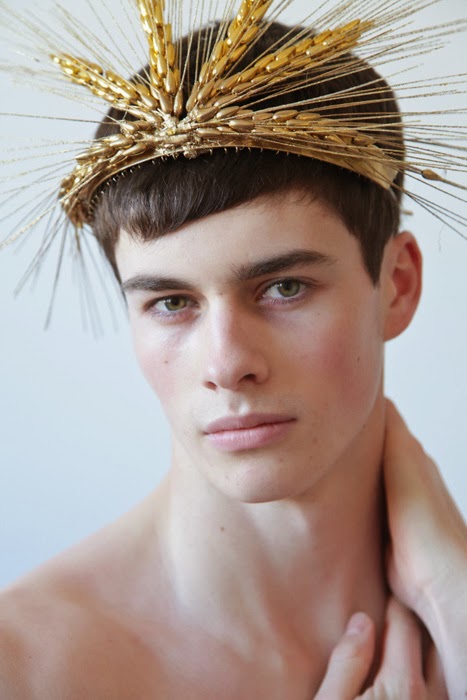
something seasonal, and it looks good on men, too!

Lana Del Ray, snow queen
Go ahead and put on a crown. Do it for realsies. 
https://www.etsy.com/listing/125841681/glitter-star-crown-headband-dreamy?ref=favs_view_7
There, don't you feel special?

https://www.etsy.com/listing/172373219/quartz-crystal-hair-comb?ref=favs_view_4
https://www.etsy.com/listing/172392585/rainbow-fluorite-hair-comb?ref=favs_view_2

edit - two more of my favorites! (I bought one!)

Saturday, December 21, 2013

Slow Light

(this post first ran in the online news magazine Creedible)


A few weeks ago it began to get cold, and it’s only getting colder. Animals are hoarding food and their pelts are growing thick and warm. Plants and trees that once grew so brightly have turned brittle and brown. Only the faithful evergreen remains decorated with bright red berries and heavy boughs. 

Even the cosmos seem to be responding to the change in the seasons. Orion the Hunter sits more prominently in the sky, and the moon that once rose so orange and round is now silver and sharp enough to cut through the night itself. The air smells like snow, wood smoke, the decay of leaves and the promise of mortality. 

Most alarming of all, the sun seems to be leaving. It sits lower on the horizon. The air is not as warm. The light is not as bright. The days are getting shorter and night is getting longer. 

Every year is the same. The sun seems to grow weaker and weaker until that one dark, terrifying night when the day is the shortest it will ever be. It gives way to the endless, black, eternal night, and it seems as if the sun has died.

The Solstice is not just a matter of light and dark, day and night, but a matter of life and death. Before science and mathematics, how were people to know that this short and fleeting day wouldn’t be the day to mark the final death throes of a dying sun? Even the memory of the previous Solstice may not have been enough to calm the heart. The sun had returned the previous year and life returned to nature, only to die again the next winter. So in this season of death, in the deepest and darkest of winters, our ancestors held their breath and hoped and prayed for the return of the Sun with its promise of rebirth and triumph over darkness.

This year, on December 21, when the day is short and the night is long, think about the sun. Have a moment of gratitude for the season. Celebration of the Solstice may be one of mankind’s oldest rituals. Whether it manifests in feasts, the decorating of evergreens, gift exchanges or simple prayer, there is no denying the magic of the Winter Solstice. 

Most of all, there is no one way, and no wrong way, to celebrate the rebirth of the Sun. The traditions have changed over the millennia, and they will change again as the needs, hopes and fears of human society shift and evolve. All that matters is that deep down, in our heart of hearts, we stand in awe of the rising sun, which will return to us again and again, no matter how deeply penetrating is the darkness of night.