|
| https://c2.staticflickr.com/8/7188/6911152252_b1744b3562_z.jpg |
Muse,
tell me about Pan, the dear son of Hermes,
with his goat's feet and two horns
-- a lover of merry noise.
I was a bit stumped for this
topic. I’ve written about Gods and
Goddesses before, but for some reason when I sat down for this post I had a bad
case of writer’s block. I went over to twitter and a friend happily chimed in with her suggestion. “Pan!”
“Really?” I thought, “him?” But the more the day went on, the more
confident I got. Yes, him.
I realized this was a good opportunity for me to do a little research,
and to think outside of my box, too. So, even though in many ways he's foreign to me, I decided to write about Pan.
Through
wooded glades he wanders with dancing nymphs who foot it on some sheer cliff's
edge, calling upon Pan, the shepherd-god, long-haired, unkempt.
I have never worked directly with
Pan, though I know many who do. My good friend and Sister-Witch has written about him extensively over the years, so
you should go over and check her stuff out.
He is one of her patrons, and the joy in her eyes when she speaks of him
is infectious. She loves him so much,
and from the joy she has in her life because of Pan, one can easily understand
his appeal.
He
has every snowy crest and the mountain peaks and rocky crests for his domain;
hither and thither he goes through the close thickets, now lured by soft
streams, and now he presses on amongst towering crags and climbs up to the
highest peak that overlooks the flocks.
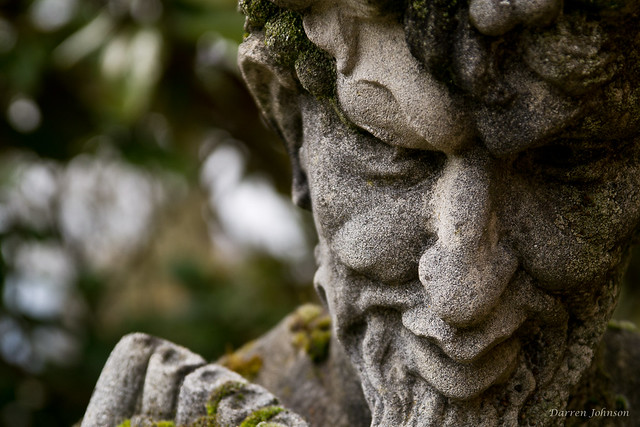
Pan is the son of Hermes. He was abandoned by his nursemaid who was so frightened
by his appearance. Have you ever felt so
ugly that even your nurse didn’t want you?
Pan may be conventionally ugly, but he gets enough attention from the
lads and ladies that it’s almost like his horns and hair don’t matter. (Or maybe it’s because of his horns and hair... tee hee!)
Often
he courses through the glistening high mountains,
and often on the shouldered
hills he speeds along slaying wild beasts, this keen-eyed god.
 |
| http://www.theoi.com/Gallery/S22.2.html |
Then all the immortals were glad in
heart and Bacchic Dionysus in especial;
and they called the boy Pan because he
delighted all their hearts.
My friend was talking about Pan
the last time we had rune study group, and she talked about him as a luminal god. I’d never thought of Pan in this
way before, and her words really stuck with me.
Only
at evening, as he returns from the chase, he sounds his note, playing sweet and
low on his pipes of reed: not even she could excel him in melody -- that bird
who in flower-laden spring pouring forth her lament utters honey-voiced song
amid the leaves.
Pan is a poet, a philosopher, and a
musician. All of these things require
extra skills and higher brain functioning.
They entail a certain sense of civilization. But Pan is also a god of wild spaces, of the untamed,
of the hidden nooks and crannies of nature.
He is half man and half animal, half civilized and half wild. He can’t fit in either place completely, so
he completely fits in neither.
At
that hour the clear-voiced nymphs are with him and move with nimble feet,
singing by some spring of dark water, while Echo wails about the mountain-top,
and the god on this side or on that of the choirs, or at times sidling into the
midst, plies it nimbly with his feet.
My
friend explained that sometimes Pan gets sad and lonely. It’s hard to not fit in, to be abandoned, to
be the butt of jokes, to be ugly and hairy (things none of us can relate to,
right?). So sometimes it gets him
down. He writes a sad tune, pens a
melancholy poem… but then perks right back up again when a lovely nymph happens
to wander by. He is able to distract
himself a bit, but the blues always returns… (nothing any of us can relate to…
right?)
 |
| Villa of the Papyri, Herculaneum. |
The
Victorian romantics were obsessed with Pan.
Being post-transcendentalists, they had rejected the age of reason and
enlightenment, returned to nature, and idealized a classical, more civilized
age. They had been separate from the
natural world for so long, that Pan, a figure who can walk both worlds (with varying
success) became an ideal. He represented
nature in all of its wild, lusty, (intellectual?) perfection. They composed poems and love songs to Pan, as
if composing love songs to a forgotten age of their ancestors.
Ronald
Hutton talks about Pan and the romantics to a great extent in his book The Triumph of the Moon: A History of Modern Pagan Witchcraft.
In his chapter “finding a God” he quotes a 1910 poem:
The odour of thy hair
They feet, thy hands shall bring
Again the Pagan spring,
And from our bodies’ union men shall
know
To cast the veil from the sad face of
woe…
But Pan!
Pan! Pan! And all the world shall be
Mingled in one wild burning ecstasy.
So
while Pan may not be my primary deity (I’m pretty comfortable in my life as an
urban Pagan and while tromping around the mountains sounds like fun it’s not
the life for me), I have a deep appreciation for him. I enjoy his stories and his imagery, and I
especially love the Victorian poetry written about him. Most of all, I love what Pan has done for so
many, what he does for so many, throughout the ages. He’s a sad, happy, lusty, hideously beautiful
god, and I love him for that.
And so hail to you, lord! I seek your
favour with a song.
And now I will remember you and another song also.
Here are some previous articles I've written about Deity and the Divine:


 by Kris
Waldherr.