Showing posts with label dionysus. Show all posts

Monday, August 18, 2014

Review: Dionysos – Exciter to Frenzy by Vikki Bramshaw


Review: Dionysos – Exciter to Frenzy by Vikki Bramshaw

This past winter I took a short online class that focused on how to build a devotional relationship with Dionysus.  It was a pretty good class, facilitated by a pretty well-known Dionysian, Sannion from the House of Vines.  While taking the class I read a lot of books I had on Dionysus that I had been meaning to get to for years.

When I first downloaded the book, I actually hadn’t been too excited about Dionysos: Exciter to Frenzy.  I had been pretty convinced that the book had been self-published and I’ve read some really ridiculous self-published books (the one I’m reading now, Spirituality from the Stars, is a doozy).  But I found out later that Exciter to Frenzy is published through Avalonia books, an independent publisher that looks like it has a few cool titles.  

from Dionysos: Exciter to Frenzy
And I'm sorry if it's mean but some of the sketches that are included in Exciter to Frenzy are a bit goofy looking.  I was really expecting a shitty book that was full of UPGs and shenanigans.  But Exciter to Frenzy had recently been published (December 2013) and it was generating some buzz in some of my on-line stomping grounds, so I figured I’d give it a chance. 

I wasn’t too impressed with the introduction.  I didn’t want to read a book about someone’s experience with Dionysus when there are five billion blogs out there I already follow who all talk about the same thing.  But as I got into the book, I was so glad that I had given it a chance!  All of my initial misgivings were unfounded, and Dionysos: Exciter to Frenzy, ended up being the perfect book to compliment my other Dionysus studies and round out my knowledge of the God.

from Dionysos: Exciter to Frenzy
Vikki Bramshaw tells a thorough story of Dionysus, including his ancient origins, animal and food associations, cults, myths, names, birth, life, death, family, and even calendar and holidays.  Each chapter includes a wealth of quotes and information from ancient source materials, and her bibliography is quite extensive and impressive.  She pretty much does a huge survey of Dionysus in Ancient Greece, and she manages to present the wealth of information in a useful linear narrative. 

This book took me a while to get through, probably because it was so dense.  But it was easy to read a chapter here and there, which extended my time with the book but really gave time for me to sit with the material.  I hadn’t been looking for something to drastically change my devotional practices, and this book gave me exactly what I wanted without me even realizing that sit was exactly what I needed.  I know so much more about Dionysus and the people who worshiped him.  I have a much better idea about the ways that he was worshiped.  I understand his names and associations so much better than I did before, and most of all, I really appreciate Bramshaw’s use of source materials for this book.
So, overall, this book was excellent and useful, and I’d recommend it to anyone who wants to deeper their knowledge and understanding of this enigmatic deity  Vikki Bramshaw is a true scholar who pays attention to detail but still approaches Deity with respect and reverence.  I can't wait to check out some of her other books, especially her piece on Hecate!


Be sure to check out my other Dionysus-themed book reviews!

The Story of Bacchus by Andrew Dalby


Friday, May 9, 2014

Pagan Blog Project - week 19 - J – Just Dance!


Oh, Thebes, nurse of Semele, crown your hair with ivy! Grow green with bryony! Redden with berries! O city, with boughs of oak and fir, come dance the dance of god! Fringe your skins of dappled fawn with tufts of twisted wool! Handle with holy care the violent wand of god! And let the dance begin! He is Bromius who runs to the mountain! To the mountain! Where the throng of women waits, driven from shuttle and loom, possessed by Dionysos!
Euripidies, The Bacchae, trans. Richmond Lattimore

Just dance!

I went to a concert recently (ARACDE FIRE) and I danced the whole time. I didn’t care how goofy I looked – a solitary fat sweaty girl in a space dress and a tiara, dancing and singing my heart out. It helped that I was in a different city (hell, a different state) and I thought “gee, I don’t know these people. I’ll never know these people. I don’t care what they think of me.” And I didn’t, and it was incredibly liberating and I had the best time ever.

I’ve been trying to dance more. I’m not very good at dancing. I’m not coordinated and I don’t have rhythm. But I really enjoy it. I really really really love dancing, actually. I love to go to dance parties and to go to concerts and to dance in my car and around the house when no one is home. I try to dance more and more every week, and one day when I have time and money (ha) I hope to take swing dance lessons with my husband so we can learn how to dance for realsies.

Dancing was never really on my radar until I went to a Midsummer ritual a few years ago, with a locally famous circle dance teacher in attendance. We spent hours outside in the heat and with the mosquitoes, dancing to the Cosmos. And while there were about a dozen of us, we were all too busy dancing for ourselves and for our Gods that it didn’t matter how goofy we all might have looked. No one was watching us because we were too busy focusing on ourselves, trying to get the moves right.

When I’m facilitating rituals that involve movement or chanting, I try to reiterate this – that we aren’t doing the ritual for each other, we’re singing or dancing for Deity. It doesn’t matter how bad we think we sound – Deity is just glad that we’re singing and dancing and chanting and sending them love and devotion and energy. And if it’s one thing I’ve learned it’s that the Cosmos have a sense of humor, so even if we look or feel a bit goofy, it’s okay. The Goddess loves to laugh, especially when we are laughing at ourselves.

It’s hard to get into this mindset. Believe me, I know. After years of occasionally crippling social anxiety, it’s taken a lifetime to work up to this point, where I can sing and dance for Deity, that I can have fun with my voice and with my body. But certain Deities who I have been working with in recent years really want their devotees to do these things, so in my love to Them, I’ve been trying to put forth the extra effort. (Which is admittedly much easier when I’m by myself or in Priestess-Mode...)

Dancing can be a lot of fun, and ritually, it does a lot, too. It raises energy on many levels. Your body gets hot and sweaty and that raises physical energy. Your raise your voice as you sing or shout or chant, which is the energy of physical vibrations in the air. You push toward your comfort zones, which can be an act of sacrifice or devotion. It’s like telling the Gods “this makes me kind of uncomfortable but I love you so much I’m gonna push through it.” It’s an emotional exercise, pushing through the anxiety of dancing or on a less-traumatic level, having fun! The emotions of fun and ecstasy create energy, and that energy can be sent out to the universe! It takes mental energy to focus on dance moves, or even mental energy to allow your mind to let go a bit. All of these energies combine to create magical energy, especially if dancing within a magical circle or ritualized setting.

I recognize that dancing isn’t for everyone, but I do feel like most have a lot to gain by dancing a bit, if just around the house or while you’re in the car or at a nightclub or even in your dreams. Dancing might be a bit awkward at first, but the more you do it, the more joy you’ll feel, and the more the Universe will be celebrated. And the more magic you’ll create with your mind, body, and spirit.

Tuesday, March 18, 2014

Review: The Story of Bacchus by Andrew Dalby


http://www.amazon.com/gp/product/B007PT0I74/ref=as_li_ss_tl?ie=UTF8&camp
Review: The Story of Bacchus by Andrew Dalby

Andrew Dalby is a linguist and historian who seems to know his stuff. I just can’t quite get behind is manner of presentation.

The Story of Bacchus is written almost like a biography, which might seem cute and charming but I didn’t think it was pulled off very well. Biographies tend to be linear and factual and usually don’t have many contradictions and differing evidence (usually, right? I actually haven’t read a biography in years, but this is how I imagine them to be.)

When writing about a God, however, how does one write linearly? How does one stick to facts? How does one avoid contradictions and how does one reconcile the evidence? Dably makes a gallant attempt at this. Seriously, he knows his stuff. It’s not the content that I thought was weird (well, it is, but that’s just Bacchus for you.) The presentation of The Story of Bacchus was just… strange, awkward, and sometimes a bit bizarre. (Or is this just the nature of Bacchus…?) I read it quickly, and it was an easy read. I even enjoyed the content. I just couldn’t get behind the writing style.

The Story begins with the love story of Zeus and Semele, and Dalby makes what I think is a reference to butt sex. He then tells about Bacchus’s childhood, adolescence, his wild wanderings in India, wine, his friends, his lovers, his triumphs, his agonies, and how he fits into the Hellenistic cosmology. All of this is great and detailed and really interesting. I’ve been studying Bacchus for years and this book really helped fill in some gaps and connect some pieces that I’ve been struggling with.

So the book is written like a story (“Zeus said this, and then Semele said this, and this is what Hera thought, and then this happened, and then this thing, and then this.”) But then he inserts some historical stuff, like chapter breaks, and this just disrupts the flow of the writing. It’s a unique way of annotating the text without adding footnotes, but it’s distracting and he doesn’t pull it off gracefully. And then the story resumes, and poor Dalby tries to be conversational with his presentation but it just seems a bit awkward and fumbling.

That all said, I liked the content of this book. (I just really didn’t like the writing style and the presentation of the information.) Dalby knows his myth, and his knows his primary (and sometimes secondary) sources. I appreciated this because now I have a better idea of which dead Greek guys said which thing about which Deity. And while I think Dalby wasn’t trying to present a heavily academic book, I think I would have appreciated old-fashioned footnotes as opposed to random paragraphs and interruptions in the text.

I keep on trying to compare this book to Otto, but they’re just too different. At first I wish I had read this one before reading Otto, thinking this one might have been easier to read and added context to Otto, but they both do different things. Dolby tells a story, Otto presents… well, somewhere between an academic treatise and a devotional piece. I don’t know if it matters if one is read before the other, just as long as both are read. They’re both useful additions to any Dionysian library.

Friday, February 21, 2014

Pagan Blog Project – week 8 - D#2 – Dead Can Dance


Pagan Blog Project – week 8 - D#2 – Dead Can Dance

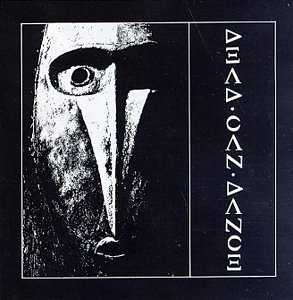
Dead Can Dance is an “English-Australian neoclassical dark wave band” that has been around since 1981. Drawing influences from all of the world and throughout history, this band can be great for ritual or devotional practices.

I was first introduced to this band in high school and I’ve been a fan ever since. Lisa Gerrard’s vocals are hard to forget, and Brendan Perry has his moments as well. Currently they have about eight studio albums and a few live albums and other projects. My favorite album of theirs is Into the Labyrinth, which contains some heavy Dionysus and Ariadne content.

There’s a lot more I can ramble on, but I’ll just let the music speak for itself.